


Dudley Seers Lecture - Sharing our Earth: Contributing to the writing of a global constitution
With Joyeeta Gupta, University of Amsterdam, The Netherlands
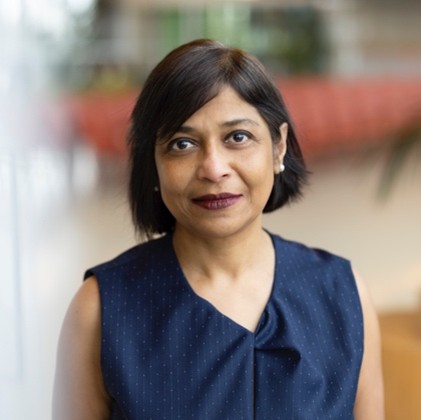
Our economy and society depend on the ability of the Earth to sustain life. However, we are overusing and abusing these resources. Air pollution is killing 7-9 million people annually; water pollution is severely affecting our health; biodiversity loss is aggravating the spread of zoonotic disease, which is more than 60% of all infectious diseases; soil is becoming degraded on lands where more than 3.2 billion people live. We will cross 1.5 °C in 2-3 years, and that exposes hundreds of millions of people to its negative impacts. And all this is happening in a world of increasing misinformation, malinformation and disinformation. Since our economy and society depend on the stability of Earth Systems as well as on reducing significant harm to others, this implies that we need to be careful about how we use our shrinking resources. Three rational actor responses include a neoliberal capitalist response to commodify and price nature; a hegemonic response to go after resources using warfare or ignoring and externalising the impacts of their behaviour on others; or a polycentric response where there are multiple centres of governance and experimentation. Joyeeta Gupta argues that these responses will not be able to address our shared problems using the case study of climate change and fossil fuels.
Instead, she argues that we need to move towards a different model of multilateral cooperation which is guided by universal and yet plural principles by which we are all, or at least the majority are, willing to live by. Sharing our Earth requires Earth System Justice – a just approach to governing the systemic challenges facing us. Sharing our Earth requires boundaries and standards for the local to global Earth systems that minimise harm to others. Sharing our Earth requires prioritising the use of the Earth’s resources to meet the minimum needs/human rights of people worldwide. Sharing our Earth requires equitably and sharing the remaining resources. Sharing our Earth requires revisiting and redesigning our financial, technological, legal and earth system approaches in such a way that we can enhance human wellbeing worldwide for all humans while living in harmony with nature. Sharing our Earth requires a bottom-up design where people (including minors, if they have parental approval) worldwide may suggest what needs to be included and why in such a Constitution. And they become contributing authors to the draft of the Global Constitution.
Joyeeta Gupta is Professor of Environment and Development in the Global South at the University of Amsterdam and Professor at IHE-Delft Institute for Water Education. Previously, she was a professor on Climate Change Policy and Law at the Vrije Universiteit in Amsterdam. She won the highest academic recognition (Spinoza Prize) in the Netherlands in 2023 (1.5 M €) and the Amsterdam Impact Prize in 2025. She has a European Research Council Advanced Grant (€2.5M 2021-2026) for climate research; and is a life-member of the Netherlands Royal Academy of Sciences. She is on the editorial board of six journals, was lead author in the Intergovernmental Panel on Climate Change (1998-2014), which won the Nobel Peace Prize in 2007 and in the Millennium Ecosystem Assessment, which won the Zayed 2nd prize. She has successfully supervised 33 PhDs. She has led, or participated in, acquiring 60 projects from funding agencies.
The lecture will be livestreamed.