


Virtual Dialogues - Living Heritage: Safeguarding the Past, Designing the Future, 05 November 2026, 15.00 CET
Second webinar in the series "Goals on the Ground: Localizing the SDGs across Jordan and Tunisia" presenting doctoral research from the Knowledge and Scientific Network.
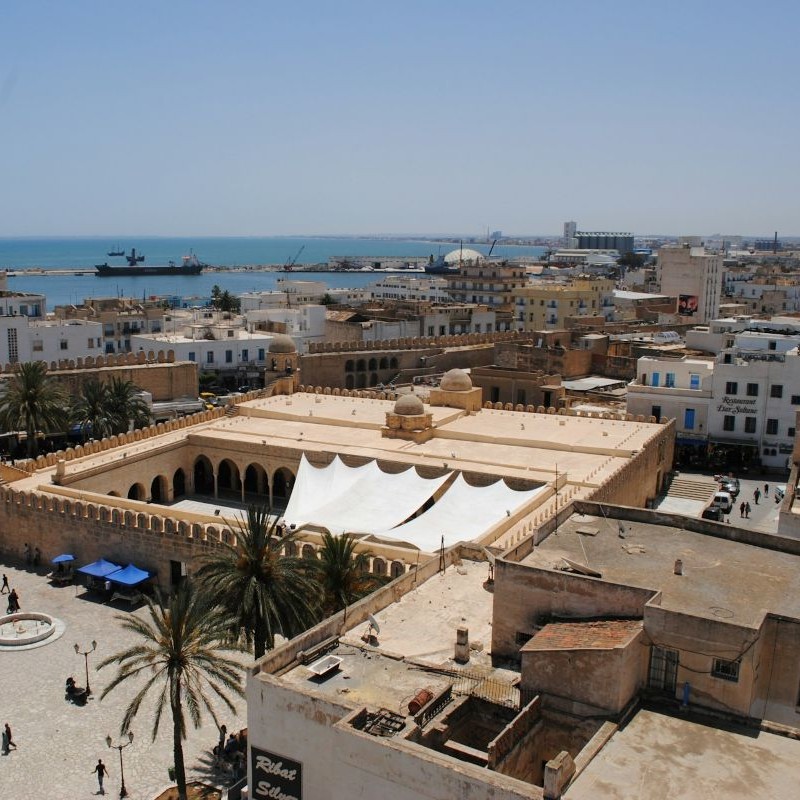
Set against accelerating urbanisation and mounting climate pressure, this webinar asks what role cultural heritage and the quality of the built environment can play in sustainable development, drawing on three doctoral studies from Tunisia and Jordan. Tangible and intangible heritage sit here alongside the documentation and energy performance of buildings, suggesting that safeguarding the past and rethinking how we build belong to the same effort.
Sana Smadah Sghaier compares two very different Tunisian settings, the UNESCO-listed medina of Sousse and the Kerkennah islands with their living tradition of charfia fishing, to trace what makes heritage-led urban revitalisation succeed in one place and stall in another. Wiem Alimi takes the undocumented Zaouia of Sidi Fradj in Kerkennah and builds it a digital twin, pairing terrestrial laser scanning, parametric modelling and semantic enrichment into a Heritage Building Information Modelling platform for predictive restoration and long-term stewardship. Amal Almalkawi shifts the focus from conservation to performance, using a computational architecture approach to test how the envelope of Irbid's residential buildings might be redesigned for lower energy use and reduced emissions.
The common thread is the conviction that heritage and the built environment are at once a resource to safeguard and a concrete lever for urban sustainability.
Speakers:
- Sana Smadah Sghaier
- Wiem Alimi
- Amal Almalkawi
Moderators:
- Marco Zupi
- Paola Aloia
Series: Goals on the Ground: Localizing the SDGs across Jordan and Tunisia
A webinar series presenting doctoral research from the Knowledge and Scientific Network.
Reaching the 2030 Agenda depends on what happens well below the level of national strategies, in the cities, municipalities and territories where global targets become concrete services, plans and decisions. This is the work of SDG localization: adapting the goals to local conditions, priorities and capacities, and making subnational governments active agents of sustainable development rather than recipients of strategies designed elsewhere.
The Knowledge and Scientific Network (KSN), part of the United Nations Local2030 Coalition, was created to strengthen this process by grounding it in scientific knowledge. It connects doctoral researchers with local authorities across Jordan and Tunisia, building a stable interface between research and policy in which evidence produced in a given territory informs the decisions taken there. Within this model municipalities stand at the centre of localization, while researchers act as mediators who turn contextual analysis into operational guidance for local administrations.
This series gathers the work of KSN doctoral researchers in three thematic sessions, each showing how localization takes concrete shape in the places where the network operates, from environmental monitoring and cultural heritage to waste and the circular economy.